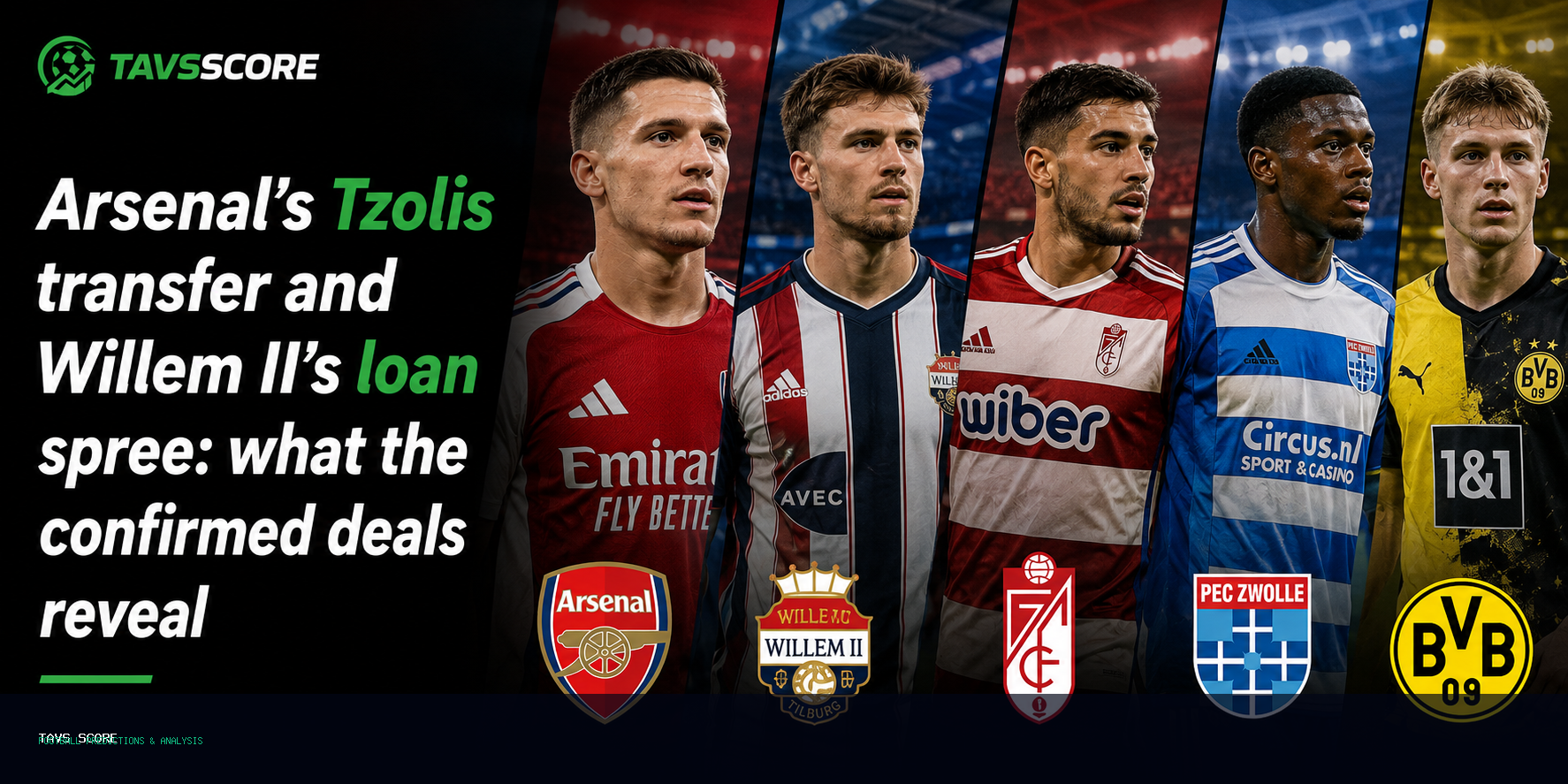
Arsenal’s £34m winger faces a pivotal test at Emirates
Arsenal’s signing of Christos Tzolis from Club Brugge for a reported £34m is one of the few completed deals that carries immediate first-team significance. The Greece international arrives with a reputation for explosive pace and a knack for scoring in transition, qualities that fit Arsenal’s direct approach under Mikel Arteta. Yet the briefing also flags the cautionary tale of his previous Premier League spell at Norwich, where his impact was limited by tactical fit and squad depth. Tzolis’ move is not merely a positional upgrade; it is a statement of intent to solve Arsenal’s right-wing conundrum without relying solely on academy products. The fee suggests the club views him as a ready-made solution rather than a project, but the real test will come in pre-season and the opening fixtures where Arteta’s system demands versatility from wide attackers. If Tzolis can translate his Championship-winning form into Premier League consistency, Arsenal’s title credentials receive a tangible boost. If not, the outlay will be scrutinised against the backdrop of a squad already packed with attacking talent.
Willem II’s loan business reshapes their Eredivisie ambitions
Willem II’s summer has been defined by two contrasting but complementary moves: the permanent arrival of free agent Mats Lemmens and the loan signing of AZ Alkmaar’s Kian Boogaard. Lemmens, arriving from RWDM, brings Eredivisie experience and a proven goal threat in lower leagues, while Boogaard adds technical quality and pressing intensity from a stronger domestic league. The club’s strategy appears to prioritise immediate competitiveness over long-term financial risk, a pragmatic approach given their mid-table position in the previous campaign. The loan deal for Boogaard is particularly shrewd: AZ retain a recall option, limiting Willem II’s exposure while giving them a player with Champions League pedigree in their ranks. These signings matter because they address Willem II’s historical struggles against relegation battles. If Lemmens can replicate his RWDM scoring record and Boogaard adapts quickly to the physical demands of the Eredivisie, the club could surpass last season’s 12th-place finish. The contrast with clubs like Arsenal—who are spending big for a title push highlights how transfer strategies diverge based on ambition and budget.
Granada’s promotion push gets a boost with López’s arrival
Granada CF’s confirmed capture of Sergio López from SV Darmstadt 98 is a calculated gamble on a player with Bundesliga experience and a track record of contributing to promotion campaigns. While the briefing does not specify López’s role, his profile suggests he could slot into Granada’s wing-back system or provide competition in midfield. The move is significant because Granada’s recent history shows a reliance on loan players and free transfers to sustain their La Liga status. A permanent signing of López’s calibre signals a shift towards building a core that can survive relegation battles without constant squad turnover. For Darmstadt, the departure is a necessary housekeeping measure; the club’s financial constraints often force them to sell players before their contracts expire. Granada, meanwhile, are betting that López’s familiarity with German football will translate to quicker adaptation in Spain, reducing the risk of early-season inconsistency. If the deal works, it could set a template for how lower-mid-table La Liga sides navigate the transfer window without overcommitting financially.
PEC Zwolle’s defensive overhaul takes shape with Cissoko’s arrival
PEC Zwolle’s capture of Issa Cissoko from Toulouse is the clearest example in the briefing of a club addressing a specific tactical weakness. Cissoko’s profile likely a ball-winning midfielder or defensive pivot aligns with the need for greater steel in PEC’s midfield, particularly after their struggles to contain opposition transitions last season. The move is part of a broader trend among Eredivisie sides to prioritise physicality and work rate in recruitment, especially as clubs like Ajax and PSV focus on technical, possession-based football. For Toulouse, the sale is a pragmatic exit; the French side’s recent transfer policy has favoured younger, lower-cost players, and Cissoko’s departure frees up wages for other targets. PEC Zwolle’s gamble is that Cissoko’s experience in Ligue 1 will bring immediate stability, allowing their more creative players—such as Elbasan Rashani to flourish in attack. If the Dutch club can avoid the relegation scrap that has plagued them in recent years, Cissoko’s signing will be remembered as a turning point.
Free transfers and loans: the unsung engine of summer business
The briefing underscores how free transfers and loans continue to underpin club strategies, often more effectively than headline-grabbing deals. Feyenoord’s release of Floris Rust to Telstar and Borussia Dortmund’s free-agent exit of Patrick Aying to the same club highlight the cyclical nature of Dutch football, where Eredivisie clubs frequently trade players with Eredivisie 2 counterparts. These moves are rarely about star power; they are about squad depth, wage management, and maintaining pathways for young players. Willem II’s double signing of Lemmens and Boogaard, meanwhile, shows how a mid-table club can leverage loans to bridge the gap between ambition and financial reality. The same logic applies to SV Darmstadt’s sale of López to Granada: a Bundesliga club shedding a player to a La Liga side that needs proven performers without the budget for marquee names. These transfers matter because they reflect the reality of modern football where sustainability often outweighs splashy spending. For clubs like Telstar or Willem II, such deals are the difference between survival and irrelevance; for selling clubs, they are a necessary part of financial housekeeping.
What the rumours tell us about the transfer window’s bigger picture
While the briefing’s confirmed deals provide a snapshot of concrete activity, the reported headlines—such as Vinicius Junior’s rumoured stay at Real Madrid or Tottenham’s interest in Manchester City’s Savinho offer context for the broader market dynamics. Reports indicating that Arsenal’s Bruno Guimarães is resisting a move to the Emirates, despite the club’s pressing need for a midfield anchor, reveal the tension between ambition and player power. Similarly, the suggestion that Barcelona may pursue Lorient’s Eli Junior Kroupi underscores how injury concerns can derail even the most advanced transfer negotiations. These rumours matter because they highlight the fragility of the transfer window: deals that appear certain can collapse overnight due to fitness issues, wage demands, or tactical shifts. For Arsenal, the Tzolis deal is a rare concrete success in a window where many of their rivals are still negotiating. For clubs like Tottenham or Barcelona, the uncertainty reflects the high stakes of recruiting in a market where premium talent is scarce and competition is fierce. The contrast between completed deals and reported interest also underscores the gap between ambition and execution a gap that will define the season’s narratives long after the window closes.
The bigger picture: how these moves fit into the season’s outlook
The confirmed transfers in the briefing paint a picture of a transfer window shaped by pragmatism rather than revolution. Arsenal’s investment in Tzolis is the exception rather than the rule, reflecting their status as title challengers. Most other moves whether Willem II’s loans, Granada’s promotion-driven signings, or PEC Zwolle’s defensive overhaul are about addressing specific weaknesses without overcommitting financially. This approach is sustainable for clubs with clear mid-term goals but risky for those without a defined strategy. The free-agent market, in particular, has become a battleground for clubs seeking to balance budgets while maintaining competitiveness, as seen in Feyenoord’s release of Rust and Dortmund’s exit of Aying. For players, these deals represent either a chance to restart their careers or a step down in ambition, depending on their stage of development. As the season approaches, the success or failure of these moves will hinge on two factors: the players’ ability to adapt to their new environments and the clubs’ capacity to integrate them quickly. The window may be closed, but the real test is only just beginning.