Why FIFA’s latest cash grab has European football in crisis
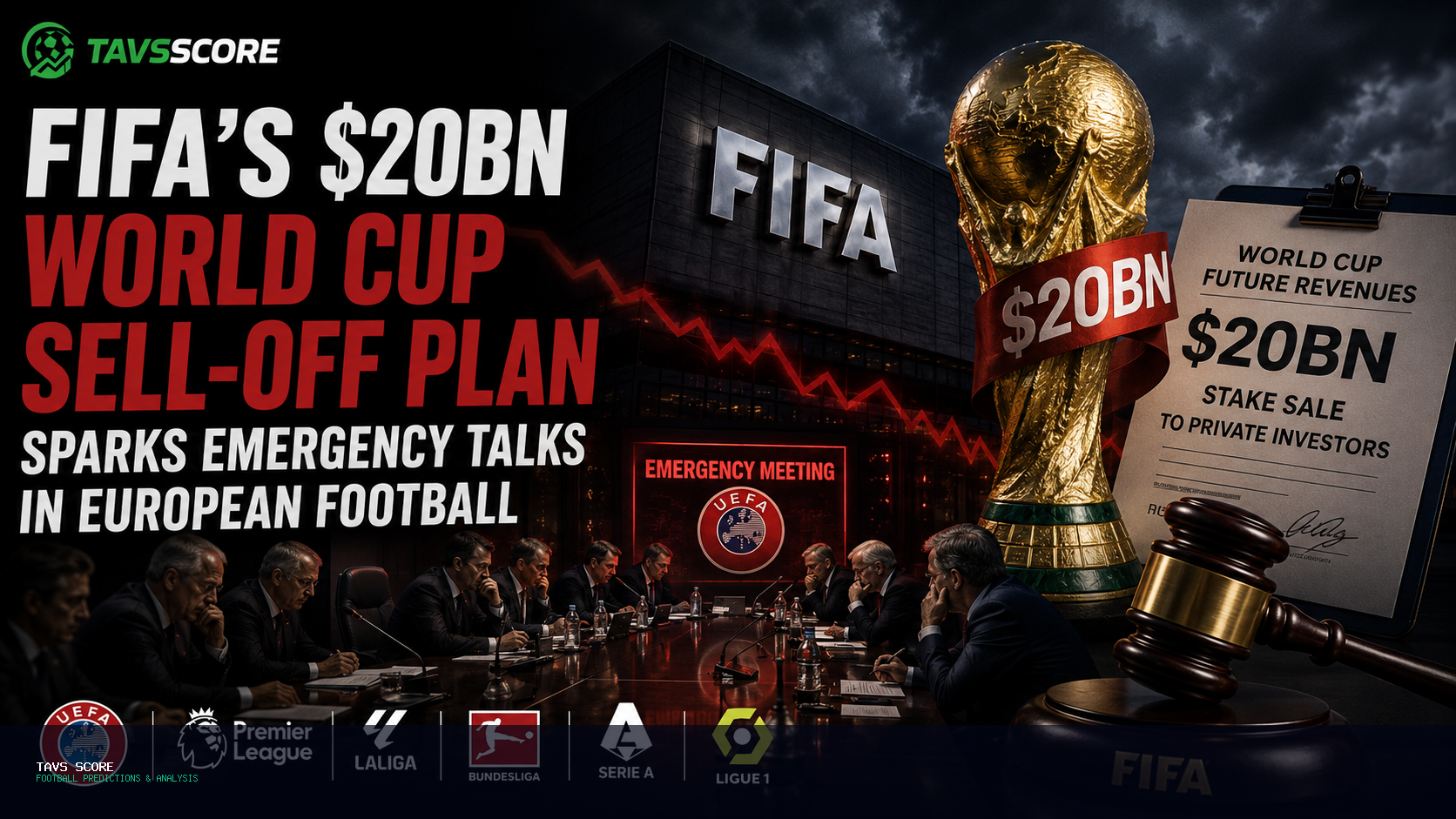
FIFA’s plan to sell a $20bn stake in future World Cups to private investors has triggered an emergency response from European football’s governing bodies. UEFA has called an urgent meeting for today, while reports indicate that French authorities have confirmed discussions between European football executives and government officials about the proposal. The move comes amid growing alarm over FIFA’s broader financial strategy, which includes a controversial $4bn stake sale that European football leaders are now considering boycotting.
The scale of the offer—$20bn for a stake in World Cup revenues—is unprecedented in sports governance. While FIFA argues the funds would accelerate global football development, European football officials view the plan as a fundamental shift in the sport’s economic model. The briefing does not confirm whether any clubs or leagues have formally endorsed the proposal, but the fact that UEFA has convened an emergency meeting underscores the gravity of the situation. Unlike previous financial controversies, this one cuts to the heart of how football’s wealth is shared and who controls it.
What makes this moment different is the direct involvement of European governments. Reports suggest French authorities have scheduled meetings between UEFA, domestic leagues, and potential investors to assess the implications of FIFA’s plan. This level of political engagement is rare in football governance, indicating that the stakes extend beyond sport into broader economic and regulatory concerns. European football’s resistance is not merely ideological; it reflects real fears that private equity control over World Cup revenues could reshape club competitions, player markets, and even national team structures.
Could a boycott actually work?
The possibility of a World Cup boycott by European football bodies is no longer theoretical. European football executives are reportedly considering withholding support for the 2026 or 2030 tournaments if FIFA proceeds with the sale. Such a move would be unprecedented in modern football, where commercial interests have long overshadowed governance disputes. The briefing does not confirm whether clubs or leagues would follow through, but the fact that the idea is being seriously discussed signals a breaking point.
A boycott would carry severe consequences. European teams and players are the backbone of FIFA’s revenue, and a withdrawal would diminish the prestige and quality of the tournament. However, the alternative—accepting private equity control over football’s most lucrative asset—could erode the sport’s autonomy for decades. The tension here is between short-term financial pragmatism and long-term structural integrity. For European football, the question is whether the risk of losing influence is worth the fight.
Reports also suggest that some executives are pushing for a united front with other confederations, particularly in Africa and Asia where FIFA’s financial promises might carry more weight. If Europe stands alone, the boycott could isolate the continent without achieving its goals. Conversely, a coordinated global response would amplify the pressure on FIFA to reconsider. The outcome hinges on whether European football can sustain its resistance long enough to force a reversal.
What’s driving FIFA’s aggressive financial strategy?
FIFA’s push to monetise future World Cups reflects a broader shift in its financial priorities. The $20bn sale is part of a strategy to unlock immediate capital, likely to fund infrastructure projects, governance reforms, or even political lobbying. Critics argue that FIFA is prioritising short-term financial gains over the long-term health of the sport, particularly in regions where football’s development depends on stable revenue streams.
The briefing does not detail FIFA’s internal motivations, but the timing is notable. FIFA is under pressure to deliver on promises of expanded competitions, including the Club World Cup and expanded World Cup formats. Selling equity stakes could provide the cash to fast-track these projects, but at the cost of diluting football’s traditional revenue-sharing models. For clubs and leagues, this represents a direct threat to their financial independence, as private investors would gain a direct stake in the sport’s most valuable asset.
Another factor is the growing influence of private equity in football. Reports indicate that European football executives are concerned about a potential takeover of football’s governance by financial institutions. If FIFA succeeds in selling World Cup stakes, it could set a precedent for other competitions to follow suit. This would further entrench the role of investors in football decisions, from squad composition to competition formats. For traditionalists, this is a dangerous precedent that could erode the sport’s soul.
How this could reshape club football in Europe
If FIFA’s plan goes ahead, the ripple effects on European club football could be profound. Clubs rely on predictable revenue streams from international competitions, particularly the Champions League and Europa League, which are indirectly tied to FIFA’s governance. A shift in World Cup revenue distribution could force UEFA to renegotiate its own financial models, potentially leading to smaller payouts for clubs or increased competition between domestic leagues for broadcasting rights.
The briefing does not specify how clubs might respond, but the financial strain could accelerate consolidation in European football. Smaller clubs might struggle to compete if their share of international revenues shrinks, while larger clubs could use their financial muscle to dominate both domestic and European competitions. This could exacerbate the existing gap between Europe’s elite and the rest, further entrenching the dominance of clubs like Bayern München, Arsenal, and Palmeiras—all currently top of their domestic leagues but with vastly different financial resources.
Another potential consequence is the impact on player markets. If FIFA’s sale reduces the funds available for development programs, clubs might face higher costs to recruit and develop talent. This could lead to a greater reliance on private investment or even state-backed funding, particularly in leagues where clubs are already financially vulnerable. For players, the changes could mean fewer opportunities at smaller clubs or increased pressure to move to bigger markets to secure contracts.
What happens next?
The emergency meeting called by UEFA will be the first major test of European football’s resolve. Reports suggest that the agenda includes assessing the legal and financial implications of FIFA’s plan, as well as exploring potential countermeasures. One option under discussion is a coordinated boycott of FIFA’s commercial activities, though the practicalities of such a move remain unclear. European football bodies could also explore alternative funding models, such as increased levies on club competitions or expanded solidarity payments from FIFA.
For now, the briefing does not confirm any concrete decisions, but the fact that the meeting is happening at all signals that European football is serious about pushing back. The outcome will depend on whether UEFA can unite its members behind a common strategy. Divisions between leagues or clubs could weaken their bargaining position, while a united front would send a strong message to FIFA and private investors alike.
Regardless of the immediate outcome, the episode highlights a growing fault line in football governance. FIFA’s financial ambitions are colliding with the traditional structures of the sport, and European football is at the forefront of the resistance. Whether this leads to meaningful reform or a prolonged standoff remains to be seen, but one thing is clear: football’s financial future is about to face its biggest challenge in decades.